

Brix Boost
Last updated:
Brix Boost is a high-phosphorus, high-potassium foliar fertilizer that raises fruit sugar levels and flavor. It drives sugar synthesis and translocation, with brix typically rising within 7–10 days of application and improvements in flavor, firmness and shelf-life.
Liquid fertilizer concentrate — Raises Brix, Improves flavor.
Liquid fertilizer concentrate from Vegalab Crop Science, powered by P, K, Mg + stevioside, xylose, trehalose, mannitol. Brix Boost targets Brix increase, flavor enhancement, fruit quality.
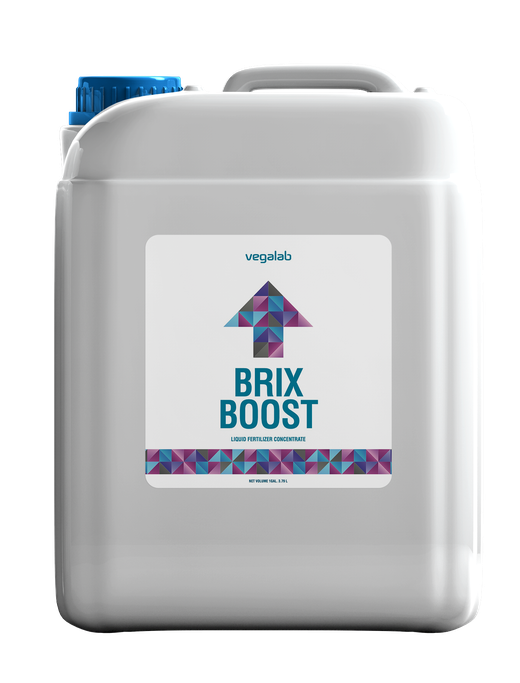
High-phosphorus and potassium foliar fertilizer that drives sugar synthesis and translocation. Brix levels rise within 7-10 days of application; fruit flavor, firmness and shelf-life improve.
| Active | P, K, Mg + stevioside, xylose, trehalose, mannitol |
|---|---|
| Targets | Brix increase, flavor enhancement, fruit quality |
| Dilution rate | 1:1,000–1:500 · 1–2 mL/L (3.8–7.6 mL/gal) · 1.0–1.5 L/ha (13.8–20.8 fl oz/acre) |
| Application | Foliar spray during flowering — 1 to 2 applications |
| Line · Category | Boost · Liquid fertilizer concentrate |
- Raises Brix in table grapes, wine grapes
- Improves sugar content in stone fruit
- Enhances flavor in melons, berries
- Increases marketable yield
| Nutrient | Content |
|---|---|
| P | 13% |
| K | 5% |
Derived from: Mono-potassium phosphate · Potassium sulfate
Contains: Citric acid
Why does brix matter?
Brix — the measure of soluble sugars in fruit — drives flavour, market grade and often price. Higher brix means sweeter, more flavourful fruit that also tends to store and travel better. For grapes, berries, melons and stone fruit, lifting brix in the final weeks before harvest can be the difference between average and premium fruit.
How does Brix Boost raise sugar and quality?
Brix Boost (0-13-5) combines phosphorus, potassium and magnesium with natural sugars (stevioside, xylose, trehalose, mannitol). Phosphorus and potassium drive the synthesis and translocation of sugars into the fruit, so brix typically rises within 7–10 days of application, alongside gains in flavour, firmness and shelf-life. The magnesium supports the photosynthesis that ultimately supplies those sugars.
When and how should it be applied?
Apply as a foliar spray during fruit development and ripening at 1:1,000–1:500 (1–2 mL/L). Timing it to the sugar-accumulation window — typically the final development and ripening phase — gives the clearest brix response. One to two applications through this window is usual.
Which crops is it for?
Brix Boost has been tested on grapes, melons, berries, stone fruit and citrus — crops where sugar content and flavour directly determine quality and value. It is especially relevant for premium and fresh-market production where eating quality is the differentiator.
How does it improve shelf-life and firmness?
Alongside raising sugars, the potassium and balanced nutrition in Brix Boost support firmer fruit with better post-harvest behaviour. Firmer, higher-quality fruit handles transport and storage better, so the benefit carries from the field through to the shelf.
Need a recommendation for your crop or pest?
Contact usCrop-specific solutions using this product
Frequently asked questions
What is the application rate for Brix Boost?
1:1,000–1:500 · 1–2 mL/L (3.8–7.6 mL/gal) · 1.0–1.5 L/ha (13.8–20.8 fl oz/acre) Application: Foliar spray during flowering — 1 to 2 applications.
Is Brix Boost suitable for natural or organic programs?
Brix Boost is a naturally derived input (P, K, Mg + stevioside, xylose, trehalose, mannitol) designed to fit low-residue and IPM programs.
What does Brix Boost do?
Raises fruit sugar (brix) and improves flavour, firmness and shelf-life.
How fast does brix rise?
Brix typically rises within 7–10 days of application.
What is the analysis?
P 13%, K 5% (NPK 0-13-5), plus magnesium and natural sugars.
When should I apply it?
During fruit development and ripening, in the sugar-accumulation window.
Which crops is it for?
Grapes, melons, berries, stone fruit and citrus.